info@technicaltranslation.com
  123456789
-
 12 February 2026
Chinese Website Localization: How to Localize a Website for Chinese Customers
Chinese website localization
is a critical step for any company that wants to successfully localize a website for Chinese customers. China’s online environment is unique, highly competitive, and shaped by local language, culture, and technology.
Simply translating English website content into Chinese does not meet user expectations or search engine requirements. Chinese users expect websites to feel local in every sense.
Why Chinese Website Localization Is Essential
China has one of the largest and most digitally active populations in the world. However, users are cautious when interacting with unfamiliar brands.
A localized website signals commitment to the Chinese market and improves trust, engagement, and conversions.
Translation vs Localization
Translation converts text from one language to another. Localization adapts the entire experience.
- Language adaptation for Chinese readers
- Cultural localization (colors, symbols, messaging)
- Design and layout changes
- Local SEO implementation
- Technical optimization
Simplified vs Traditional Chinese
Simplified Chinese is used in mainland China, while Traditional Chinese is used in Taiwan and Hong Kong.
Choosing the correct script is essential for credibility and readability.
Cultural Localization
Beyond Text
Cultural localization
goes beyond translation and affects how users perceive your brand.
- Colors and symbols matter (e.g., red = prosperity)
- Images and numbers have cultural meaning
Tone & Messaging
Chinese users prefer clear, respectful, and informative communication. Avoid overly aggressive marketing language.
Chinese UX Preferences
- Clear navigation menus
- Strong trust signals
- Visible call-to-actions
- Mobile-first design
Mobile Optimization
Mobile dominates China’s digital landscape. Your website must be fast, responsive, and optimized for mobile users.
Local SEO & Baidu Optimization
Google is not widely accessible in China. Baidu is the primary search engine.
Technical Factors
- Fast loading speed
- Clean HTML structure
- Proper Chinese meta tags
Content Optimization
Content must be written specifically for Chinese users with proper keyword placement and structure.
Technical Localization
- Hosting performance
- Browser compatibility
- Optimized media files
- Regulatory compliance
Common Mistakes
- Using machine translation only
- Ignoring cultural differences
- Using Google SEO strategy
- Poor mobile optimization
Conclusion
Chinese website localization is essential for success in China. From language and culture to SEO and performance, every detail matters.
For expert support, visit our
Contact Us page
FAQs
1. What is Chinese website localization?
It adapts language, design, and SEO for Chinese users.
2. Is translation enough?
No, localization includes cultural and technical adaptation.
3. Which Chinese should I use?
Simplified for China, Traditional for Taiwan/Hong Kong.
4. Why is Baidu important?
It is the main search engine in China.
5. How long does localization take?
It depends on project size and complexity.
Most Popular Posts

Chinese Financial Translation Best Practices for Banking and Accounting Documents
Chinese financial translation best practices are critical for any organization…
Read More
English-to-Chinese vs Chinese-to-English: What You Must Know Before Translating Documents
When planning a translation project, many clients assume that translating…
Read More
Technical & Patent Translations: What Your Chinese Translator MUST Know
As technology companies expand into China and Chinese innovation continues…
Read More
Beware of Fake Facebook Pages Impersonating Us
We want to make our community aware of an important…
Read MoreRelated Posts

Chinese Financial Translation Best Practices for Banking and Accounting Documents
Chinese financial translation best practices are critical for any organization working with Chinese banks, investors,…
Read More
English-to-Chinese vs Chinese-to-English: What You Must Know Before Translating Documents
When planning a translation project, many clients assume that translating from English to Chinese is…
Read More
Technical & Patent Translations: What Your Chinese Translator MUST Know
As technology companies expand into China and Chinese innovation continues to influence global markets, the…
Read More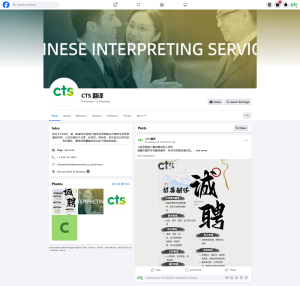
Beware of Fake Facebook Pages Impersonating Us
We want to make our community aware of an important issue. Recently, we discovered that…
Read More